Situated in East Asia on the western shore of the Pacific Ocean, China has a land area of approximately 9.6 million square kilometers. Its continental coastline along the eastern and southern regions stretches for more than 18,000 kilometers, while the water area of its inland and marginal seas covers over 4.7 million square kilometers. Scattered across these waters are more than 7,600 islands of varying sizes, among which Taiwan Island is the largest with an area of 35,798 square kilometers. China shares land borders with 14 countries and has 8 maritime‑neighbouring states. Its provincial‑level administrative divisions consist of 4 municipalities directly under the Central Government, 23 provinces, 5 autonomous regions and 2 special administrative regions. Beijing is the national capital.
National Flag, National Anthem, National Emblem and National Day
The Five‑star Red Flag is the national flag of the People’s Republic of China. The red colour symbolizes revolution. The five‑pointed stars and their arrangement embody the great unity of the revolutionary people under the leadership of the Communist Party of China. The yellow stars stand for brightness against the red background; yellow appears brighter and more elegant than white. Each of the four smaller stars has one point directed toward the centre of the big star, signifying unity around one central core and creating a compact visual composition.
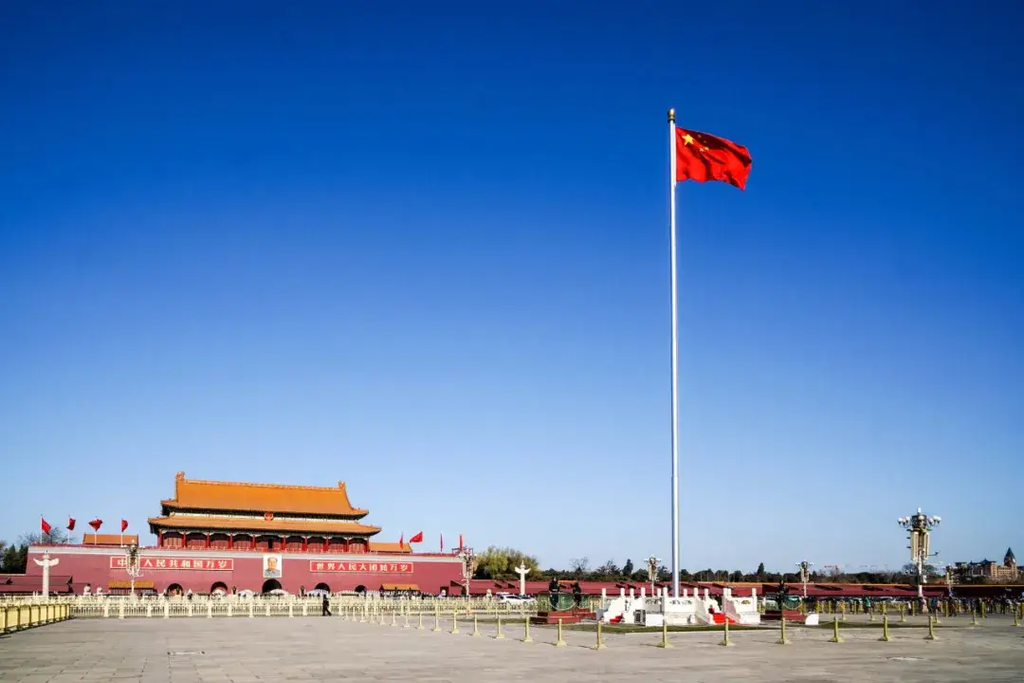
The national emblem of the People’s Republic of China features the national flag, Tian’anmen Gate, a gear and sheaves of wheat and rice. It symbolizes the New‑Democratic Revolution since the May Fourth Movement and the birth of the new People’s Republic of China with people’s democratic dictatorship led by the working class and based on the worker‑peasant alliance.
October 1 each year marks the founding day of the People’s Republic of China and is designated as China’s National Day. March of the Volunteers serves as the national anthem of the People’s Republic of China.
Language and Writing System
China is home to 56 ethnic groups, making it a multi‑ethnic country with diverse languages, dialects and writing systems. Putonghua (Standard Mandarin) and standardized Chinese characters are the official national spoken and written language. Putonghua, the standard form of Chinese, takes Beijing pronunciation as its phonetic standard, northern dialects as its base, and exemplary modern vernacular Chinese writings as grammatical norms.
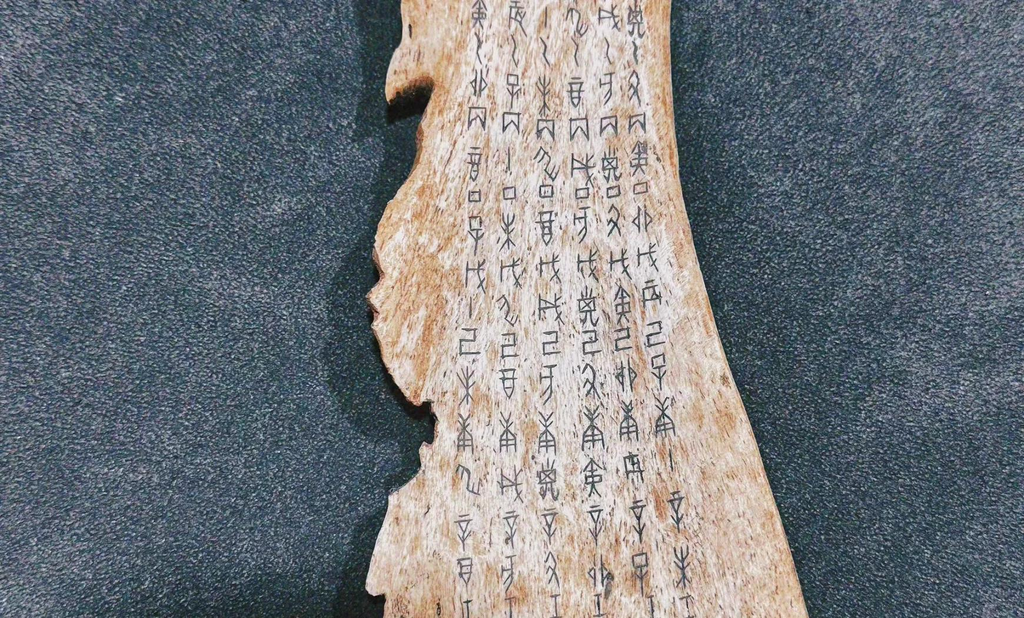
Modern Chinese comprises the standard language (Putonghua) and numerous dialects. Chinese dialects are generally classified into ten major groups: Mandarin, Jin, Wu, Hui, Min, Yue (Cantonese), Hakka, Gan, Xiang and Pinghua.
National Capital
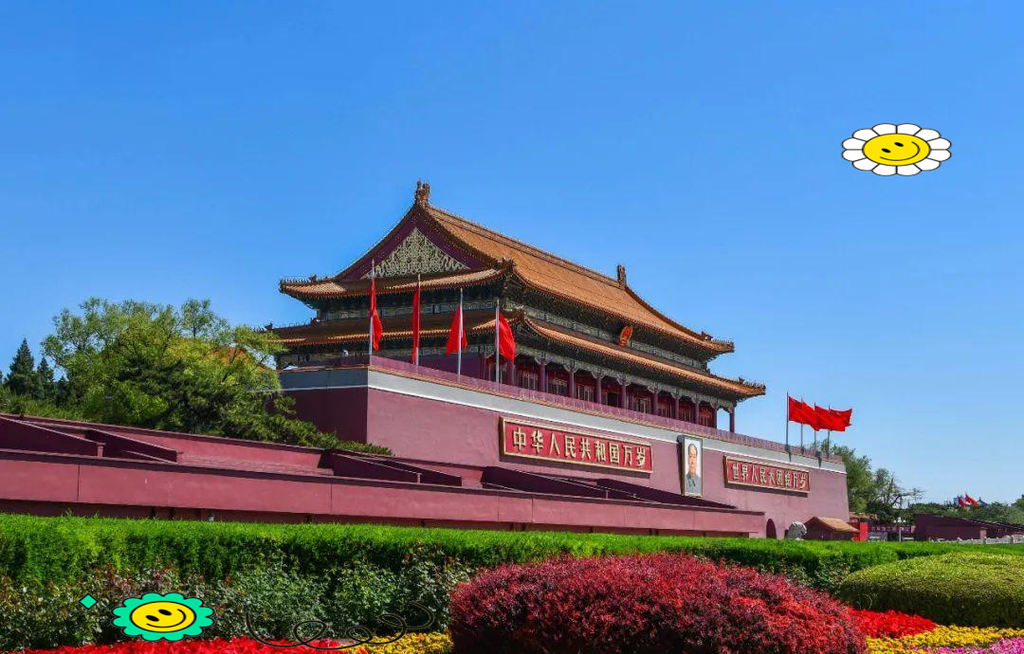
Beijing, abbreviated as “Jing”, is the capital of China. It hosts the Central Committee of the Communist Party of China and the Central People’s Government of the People’s Republic of China. As one of the four national municipalities directly under the Central Government, Beijing functions as the nation’s centre for politics, economy, science and culture as well as a hub for domestic and international exchanges. It is also a famous historical and cultural city and one of China’s ancient capitals.
Population and Ethnic Groups
Throughout history, China has remained one of the world’s most populous nations, accounting for roughly 20% of the global population for a long period and exerting substantial influence on the world population landscape. According to data released by the National Bureau of Statistics, China’s total population reached 1408.28 million at the end of 2024.
The Chinese nation boasts a long‑standing history. Since ancient times, ancestors of all ethnic groups have laboured, lived and multiplied across this land, jointly contributing wisdom to Chinese civilization and the formation of a unified multi‑ethnic country. There are altogether 56 ethnic groups in China. The Han ethnic group makes up approximately 92% of the total population, and the remaining 55 ethnic minorities account for about 8%.
Climate
China’s vast territory spans a wide range of latitudes, with varying distances from the sea and diverse terrain elevations, resulting in a rich variety of climate types. In terms of thermal zones, China features tropical, subtropical, warm‑temperate, mid‑temperate, cold‑temperate zones and the Qinghai‑Xizang Plateau climatic zone.
In winter, a huge temperature gap exists between the north and the south: Mohe in Heilongjiang Province sees temperatures below ‑30℃, while areas south of the zero‑degree isotherm stay above 0℃, with Sanya in Hainan often exceeding 20℃.
Summers are generally hot nationwide with little north‑south temperature difference. Except for high‑altitude regions such as the Qinghai‑Xizang Plateau and the Tianshan Mountains, most parts of China register temperatures above 20℃, and many southern areas reach over 28℃. The Turpan Basin in Xinjiang has an average July temperature as high as 32℃ and is known as China’s summer heat centre.
Public Holidays
Holidays for all citizens: New Year’s Day (1‑day holiday on January 1); Spring Festival (3‑day holiday on the 1st, 2nd and 3rd day of the first lunar month); Qingming Festival (1‑day holiday on the day of Qingming); Labour Day (1‑day holiday on May 1); Dragon‑Boat Festival (1‑day holiday on the lunar Dragon‑Boat day); Mid‑Autumn Festival (1‑day holiday on the lunar Mid‑Autumn day); National Day (3‑day holiday on October 1, 2 and 3).
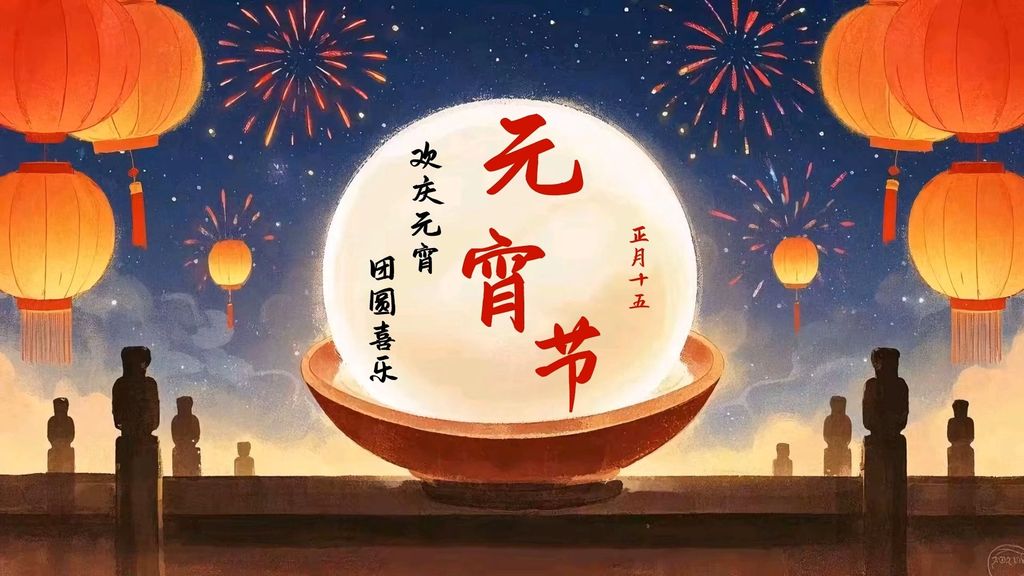
Holidays for specific groups of citizens: Women’s Day (March 8): half‑day leave for women; Youth Day (May 4): half‑day leave for young people aged 14 and above; Children’s Day (June 1): one‑day leave for children under 14; PLA Army Day (August 1): half‑day leave for active‑duty military personnel.
For traditional festivals of ethnic minorities, local people’s governments in ethnic‑minority‑inhabited regions shall set holiday dates in accordance with respective ethnic customs.
Commemorative days including the February‑7 Incident, May‑30 Movement, July‑7 War of Resistance against Japanese Aggression, September‑3 Victory‑over‑Japan Commemoration, September‑18 Incident, Teachers’ Day, Nurses’ Day, Journalists’ Day and Arbor Day carry no official public holidays.
If a public holiday for all citizens falls on a Saturday or Sunday, compensatory leave shall be arranged on working days. No compensatory leave will be granted when holidays for specific‑group citizens fall on weekends.
发表回复