Situated in East Asia on the western shore of the Pacific Ocean, China has a land area of approximately 9.6 million square kilometers. Its continental coastline along the eastern and southern regions stretches for more than 18,000 kilometers, while the water area of its inland and marginal seas covers over 4.7 million square kilometers. Scattered across these waters are more than 7,600 islands of varying sizes, among which Taiwan Island is the largest with an area of 35,798 square kilometers. China shares land borders with 14 countries and has 8 maritime‑neighbouring states. Its provincial‑level administrative divisions consist of 4 municipalities directly under the Central Government, 23 provinces, 5 autonomous regions and 2 special administrative regions. Beijing is the national capital.
National Flag, National Anthem, National Emblem and National Day
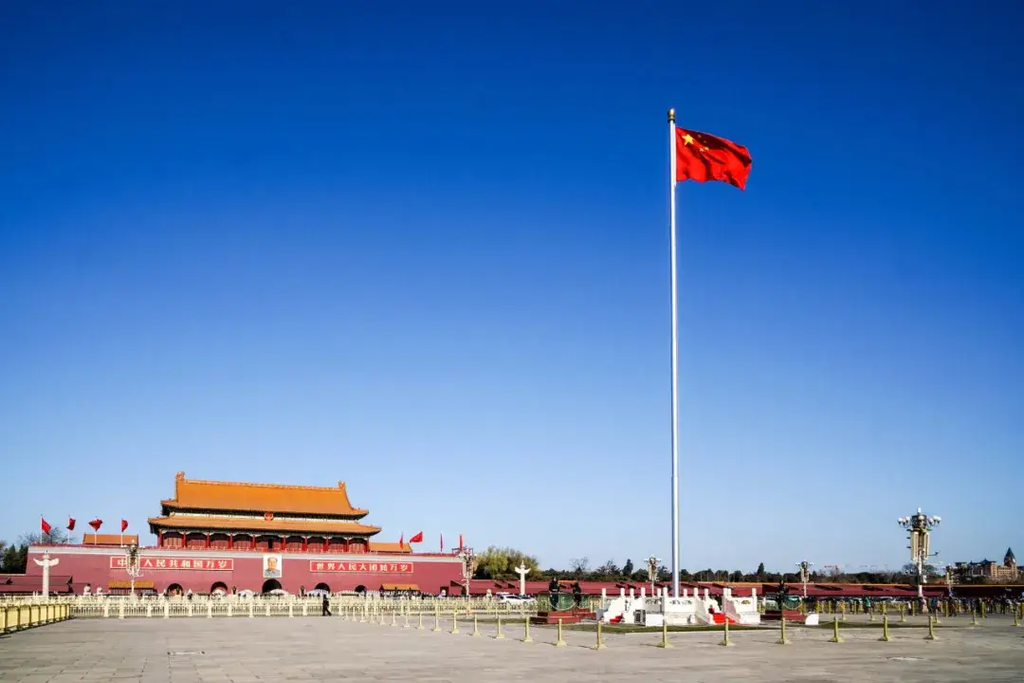
The Five‑star Red Flag is the national flag of the People’s Republic of China. The red colour symbolizes revolution. The five‑pointed stars and their arrangement embody the great unity of the revolutionary people under the leadership of the Communist Party of China. The yellow stars stand for brightness against the red background; yellow appears brighter and more elegant than white. Each of the four smaller stars has one point directed toward the centre of the big star, signifying unity around one central core and creating a compact visual composition.
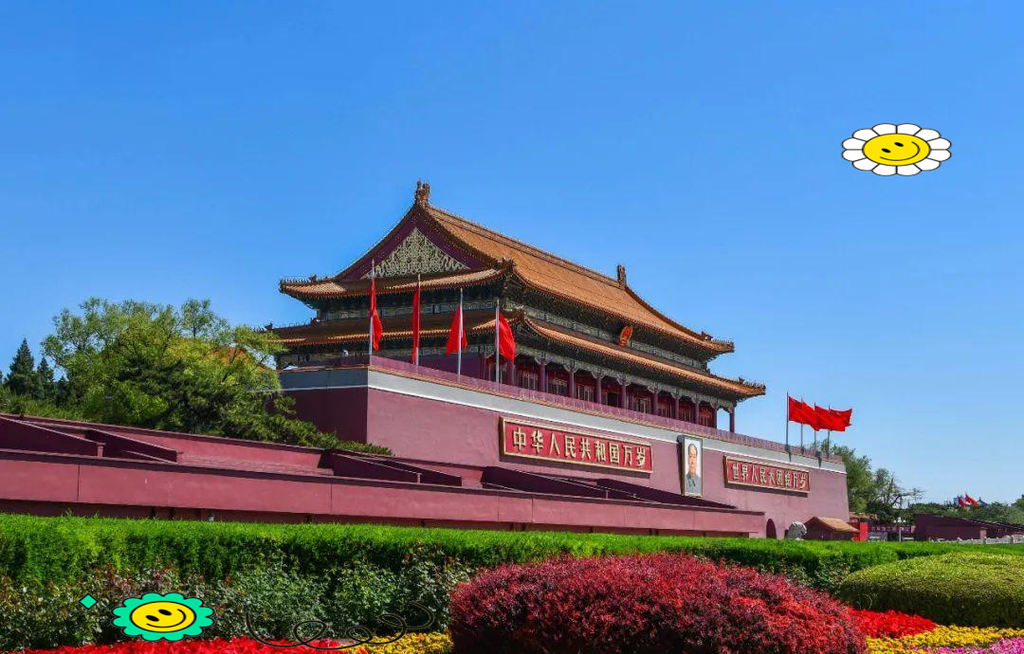
The national emblem of the People’s Republic of China features the national flag, Tian’anmen Gate, a gear and sheaves of wheat and rice. It symbolizes the New‑Democratic Revolution since the May Fourth Movement and the birth of the new People’s Republic of China with people’s democratic dictatorship led by the working class and based on the worker‑peasant alliance.
October 1 each year marks the founding day of the People’s Republic of China and is designated as China’s National Day. March of the Volunteers serves as the national anthem of the People’s Republic of China.
Language and Writing System
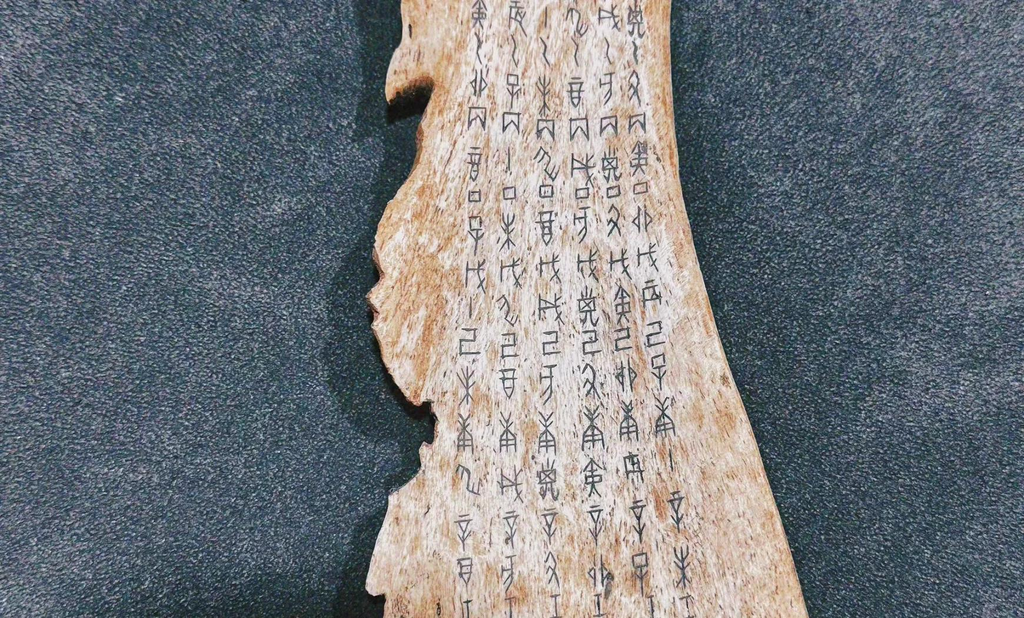
China is home to 56 ethnic groups, making it a multi‑ethnic country with diverse languages, dialects and writing systems. Putonghua (Standard Mandarin) and standardized Chinese characters are the official national spoken and written language. Putonghua, the standard form of Chinese, takes Beijing pronunciation as its phonetic standard, northern dialects as its base, and exemplary modern vernacular Chinese writings as grammatical norms.
Modern Chinese comprises the standard language (Putonghua) and numerous dialects. Chinese dialects are generally classified into ten major groups: Mandarin, Jin, Wu, Hui, Min, Yue (Cantonese), Hakka, Gan, Xiang and Pinghua.
National Capital
Beijing, abbreviated as “Jing”, is the capital of China. It hosts the Central Committee of the Communist Party of China and the Central People’s Government of the People’s Republic of China. As one of the four national municipalities directly under the Central Government, Beijing functions as the nation’s centre for politics, economy, science and culture as well as a hub for domestic and international exchanges. It is also a famous historical and cultural city and one of China’s ancient capitals.
Population and Ethnic Groups
Throughout history, China has remained one of the world’s most populous nations, accounting for roughly 20% of the global population for a long period and exerting substantial influence on the world population landscape. According to data released by the National Bureau of Statistics, China’s total population reached 1408.28 million at the end of 2024.
The Chinese nation boasts a long‑standing history. Since ancient times, ancestors of all ethnic groups have laboured, lived and multiplied across this land, jointly contributing wisdom to Chinese civilization and the formation of a unified multi‑ethnic country. There are altogether 56 ethnic groups in China. The Han ethnic group makes up approximately 92% of the total population, and the remaining 55 ethnic minorities account for about 8%.
Climate
China’s vast territory spans a wide range of latitudes, with varying distances from the sea and diverse terrain elevations, resulting in a rich variety of climate types. In terms of thermal zones, China features tropical, subtropical, warm‑temperate, mid‑temperate, cold‑temperate zones and the Qinghai‑Xizang Plateau climatic zone.
In winter, a huge temperature gap exists between the north and the south: Mohe in Heilongjiang Province sees temperatures below ‑30℃, while areas south of the zero‑degree isotherm stay above 0℃, with Sanya in Hainan often exceeding 20℃.
Summers are generally hot nationwide with little north‑south temperature difference. Except for high‑altitude regions such as the Qinghai‑Xizang Plateau and the Tianshan Mountains, most parts of China register temperatures above 20℃, and many southern areas reach over 28℃. The Turpan Basin in Xinjiang has an average July temperature as high as 32℃ and is known as China’s summer heat centre.
Public Holidays
Holidays for all citizens: New Year’s Day (1‑day holiday on January 1); Spring Festival (3‑day holiday on the 1st, 2nd and 3rd day of the first lunar month); Qingming Festival (1‑day holiday on the day of Qingming); Labour Day (1‑day holiday on May 1); Dragon‑Boat Festival (1‑day holiday on the lunar Dragon‑Boat day); Mid‑Autumn Festival (1‑day holiday on the lunar Mid‑Autumn day); National Day (3‑day holiday on October 1, 2 and 3).
Holidays for specific groups of citizens: Women’s Day (March 8): half‑day leave for women; Youth Day (May 4): half‑day leave for young people aged 14 and above; Children’s Day (June 1): one‑day leave for children under 14; PLA Army Day (August 1): half‑day leave for active‑duty military personnel.
For traditional festivals of ethnic minorities, local people’s governments in ethnic‑minority‑inhabited regions shall set holiday dates in accordance with respective ethnic customs.
Commemorative days including the February‑7 Incident, May‑30 Movement, July‑7 War of Resistance against Japanese Aggression, September‑3 Victory‑over‑Japan Commemoration, September‑18 Incident, Teachers’ Day, Nurses’ Day, Journalists’ Day and Arbor Day carry no official public holidays.
If a public holiday for all citizens falls on a Saturday or Sunday, compensatory leave shall be arranged on working days. No compensatory leave will be granted when holidays for specific‑group citizens fall on weekends.
Remote Antiquity and Slave Society (1.7 million years ago‑476 B.C.)
China is one of the world’s earliest civilizations with nearly 4,000 years of recorded written history. Fossil remains of Yuanmou Man discovered in Yunnan Province prove that Yuanmou Man, dating back 1.7 million years, is the earliest known primitive human within Chinese territory. Peking Man, who lived around Zhoukoudian near Beijing nearly 600,000 years ago, could walk upright, make and use simple tools and master the use of fire. Neolithic sites dating back roughly 10,000 years are spread across the whole of China. At the Hemudu Site in Yuyao, Zhejiang Province and the Banpo Site near Xi’an, which are 6,000‑7,000 years old, archaeologists have uncovered artificially‑cultivated rice, millet and farm implements. The oldest dynasty, the Xia Dynasty, began in 2070 B.C. Centred in what is now western Henan and southern Shanxi Provinces, its influence extended to both sides of the Yellow River, marking China’s entry into slave society. The Shang and Western Zhou Dynasties that succeeded the Xia further developed the slave system. Then came the Spring‑and‑Autumn and Warring‑States Periods when royal power declined and vassal states vied for hegemony. This era witnessed the transition from slave society to feudal society.
Some 5,000 years ago, Chinese people had already mastered copper smelting technology. During the Shang Dynasty more than 3,000 years ago, iron was put into use. White pottery and painted pottery were produced, and silk weaving reached a fairly advanced level, giving birth to the world’s earliest jacquard weaving technique. Steel‑making technology emerged in the Spring‑and‑Autumn Period. The Spring‑and‑Autumn and Warring‑States Periods saw unprecedented intellectual prosperity, producing far‑reaching thinkers including Laozi, Confucius and Mencius, as well as military strategist Sun Wu.
Qin Shi Huang (259‑210 B.C.) and His Empire
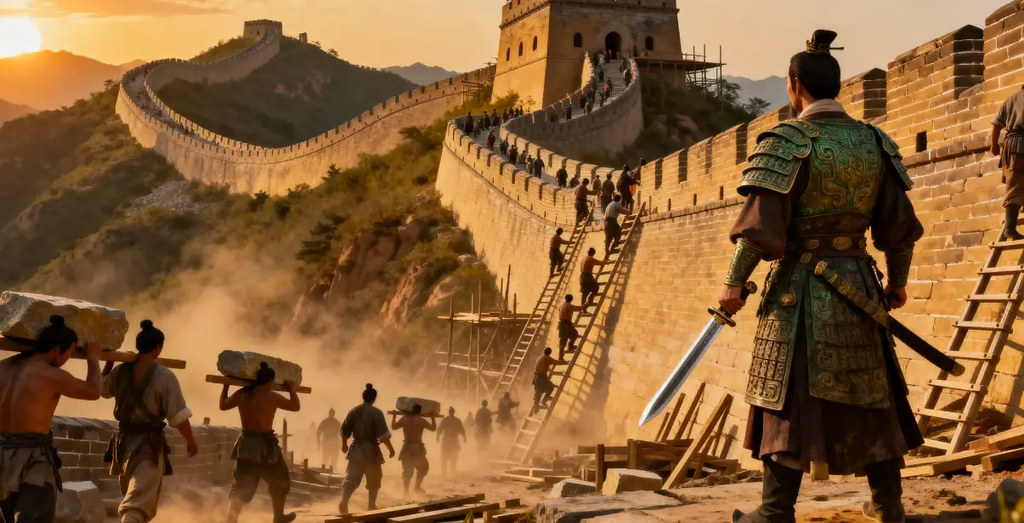
In 221 B.C., Ying Zheng, known as Qin Shi Huang, put an end to over 250 years of warfare among vassal states in the Warring‑States Period and founded the Qin Dynasty, China’s first unified, centralised multi‑ethnic feudal state. Qin Shi Huang standardized writing, weights and measures, and currency, and established the prefecture‑county administrative system. The framework of feudal state he laid down was followed for more than 2,000 years afterwards. Within more than a decade, he mobilised over 300,000 people to build the 5,000‑kilometre‑long Great Wall in northern China and started constructing his massive mausoleum during his lifetime. The Terracotta Army guarding the Mausoleum of Qin Shi Huang, unearthed in 1974, shocked the whole world. The 8,000 life‑size pottery warriors, horses and chariots are vividly modelled and hailed as “the Eighth Wonder of the World”.
Han Dynasty (206 B.C.‑220 A.D.) and the Silk Road
In 206 B.C., Liu Bang founded the powerful Han Dynasty. Agriculture, handicrafts and commerce flourished greatly and the population reached 50 million. The reign of Emperor Wu of Han (140‑87 B.C.) represented the heyday of the Han Dynasty. He expanded central government control from the Central Plains to the Western Regions (today’s Xinjiang and parts of Central Asia). He dispatched envoy Zhang Qian on two missions to the Western Regions, opening the route from Chang’an (modern‑day Xi’an, Shaanxi Province) via Xinjiang and Central Asia to the eastern shore of the Mediterranean. This route became known as the Silk Road, through which splendid Chinese silk products were continuously transported westwards. With growing east‑west exchanges, Buddhism was introduced into China in the 1st century A.D. In 105 A.D., Cai Lun, a court official, drew on folk papermaking experience and invented papermaking technology, bringing fundamental changes to human writing materials.
Prosperous Tang Dynasty (618‑907 A.D.)
After the Han Dynasty came the Three Kingdoms, Jin Dynasty, Southern‑and‑Northern Dynasties and Sui Dynasty. In 618 A.D., Li Yuan established the Tang Dynasty. His son, Emperor Taizong of Tang (reigned 626‑649), adopted a series of enlightened policies and pushed China’s feudal prosperity to its peak. Agriculture, handicrafts and commerce thrived; technologies for textile dyeing, ceramics, metal smelting and ship‑building made further progress, and a dense network of water and land transportation stretched across the country. In the 660s, Chinese influence took firm root in the Tarim Basin, Dzungarian Basin and Ili River Valley and extended to many city‑states in Central Asia. China established extensive economic and cultural ties with Japan, Korea, India, Persia, Arabia and many other countries.
Song, Yuan, Ming and Qing Dynasties (960‑1911)
Following the fall of the Tang Dynasty came the turbulent Five‑Dynasties‑and‑Ten‑Kingdoms period. In 960 A.D., Zhao Kuangyin, a general of the Later Zhou, founded the Song Dynasty (960‑1279), divided into the Northern Song and Southern Song. When the capital moved south in the Southern Song, advanced northern economy and culture were spread to southern China and boosted local economic development. The Song Dynasty led the world in astronomy, science and technology and printing. Bi Sheng’s invention of movable‑type printing revolutionized human printing history.
In 1206, Genghis Khan established the Mongol Khanate. His grandson Kublai Khan took control of the Central Plains in 1271 and founded the Yuan Dynasty (1271‑1368), with Dadu (modern‑day Beijing) as its capital. Kublai Khan ended centuries‑long division of multiple regimes and achieved national unification that included Xinjiang, Xizang and Yunnan. Papermaking, printing, the compass and gunpowder, China’s Four Great Inventions of ancient science and technology, spread to all parts of the world from the Song‑Yuan era and contributed immensely to global civilization.
In 1368, Zhu Yuanzhang, the Hongwu Emperor, founded the Ming Dynasty (1368‑1644) in Nanjing. After ascending the throne, his son Zhu Di (1360‑1424) launched large‑scale construction of Beijing city and palaces and officially moved the capital to Beijing in 1421. Between 1405 and 1433, he sent the eunuch Zheng He to lead huge fleets on seven long‑distance ocean voyages. Sailing through Southeast Asia, the Indian Ocean, the Persian Gulf and the Maldives, the expeditions reached as far as Somalia and Kenya on the East African coast. These represented the largest‑scale and farthest‑reaching maritime explorations before Columbus’s age.
In the late Ming Dynasty, the Jurchen people in Northeast China rose rapidly and established the Qing Dynasty (1644‑1911) with Beijing as its capital in 1644. The most renowned Qing Emperor Kangxi (reigned 1661‑1722) reunified Taiwan and repelled Tsarist Russian invasions. He also strengthened central administration over Xizang and formulated a complete set of rules whereby the central government made final decisions on local Xizang leaders. Under his rule, China’s territory exceeded 11 million square kilometres.
Modern Period (1840‑1919)
At the beginning of the 19th century, the Qing Dynasty went into rapid decline. Britain imported massive quantities of opium into China, and the Qing government tried to ban the opium trade. To protect its opium interests, Britain launched an aggressive war against China in 1840. The Qing government finally signed the humiliating Treaty of Nanking with Britain. After the First Opium War, Britain, the United States, France, Russia, Japan and other powers forced the Qing court to conclude a series of unequal treaties. Gradually, China turned into a semi‑colonial and semi‑feudal society. The 1911 Revolution led by Sun Yat‑sen overthrew more than 200 years of Qing rule, ended over 2,000 years of feudal monarchy and established the Republic of China. It ranks among the most epoch‑making events in modern Chinese history.
New‑Democratic Revolution (1919‑1949)
The May 4th Movement of 1919 is regarded as the ideological origin of many pivotal events in modern Chinese history. Its direct cause was unequal clauses imposed on China after World War I. Strong patriotism sparked this student‑initiated protest movement which soon involved people from all walks of life nationwide. It also opened China to diverse new ideological trends, most notably the spread of Marxism‑Leninism. In 1921, thirteen delegates including Mao Zedong, representing communist groups nationwide, convened the First National Congress in Shanghai, marking the birth of the Communist Party of China. Leading the Chinese people through the New‑Democratic Revolution, the CPC went through four historical stages: the Northern Expedition (1924‑1927), the Agrarian Revolutionary War (1927‑1937), the full‑scale War of Resistance Against Japanese Aggression (1937‑1945) within the 14‑year Chinese People’s War of Resistance Against Japanese Aggression (1931‑1945), and the Liberation War (1945‑1949). During the War of Resistance Against Japanese Aggression, the CPC cooperated with the Kuomintang to fight invaders and secured final victory. In 1945, the Kuomintang launched the civil war. After three‑year Liberation War, the CPC overthrew the Kuomintang government in 1949.
People’s Republic of China (1949‑ )
On 1 October 1949, 300,000 people gathered at Tian’anmen Square in Beijing for the Founding Ceremony. Mao Zedong, Chairman of the Central People’s Government, solemnly proclaimed the formal founding of the People’s Republic of China.
In the early years of the new nation, the Chinese government successfully carried out land reform across regions home to over 90 percent of the agricultural population, granting roughly 47 million hectares of land to 300 million farmers. The First Five‑Year Plan implemented from 1953 to 1957 achieved remarkable results: national income grew at an annual average rate of over 8.9 percent. A batch of basic industries essential for national industrialization were established, including aircraft and automobile manufacturing, heavy and precision machinery production, power‑generation equipment, metallurgical and mining machinery, as well as production of high‑grade alloy steel and non‑ferrous metals. From 1957 to 1966, China engaged in large‑scale socialist construction. Compared with 1956, the original value of national industrial fixed assets tripled by 1966; national income calculated at comparable prices rose by 58 percent; output of major industrial products increased several‑fold or even more than ten‑fold. Large‑scale farm infrastructure upgrading and technological transformation were also underway. The ten‑year Great Cultural Revolution lasted from May 1966 to October 1976, bringing the most severe setbacks and losses to the country and people since the founding of PRC. In October 1976, the counter‑revolutionary Gang of Four was smashed, putting an end to the Great Cultural Revolution and ushering China into a new historical era. Deng Xiaoping resumed his leading post. Starting from 1979, he introduced the Reform and Opening‑up policy and shifted the focus of work to modernization drive. Through economic and political restructuring, China gradually embarked on a path of socialist modernization with Chinese characteristics. Since reform and opening‑up, China has undergone profound transformation with rapid economic growth and marked improvement in people’s living standards, one of the most favourable periods since the founding of the People’s Republic. In 1989, Jiang Zemin became General Secretary of the CPC Central Committee and assumed the Presidency in 1993. Leading the third‑generation collective leadership of the CPC, he upheld and carried forward the reform‑and‑opening‑up policy initiated by Deng Xiaoping, bringing China stable political situation and rapid economic development. The 14th National Congress of CPC in 1992 set the goal for China’s economic restructuring: establishing a socialist market‑economy system. On 1 July 1997, the Chinese Government resumed the exercise of sovereignty over Hong Kong; on 20 December 1999, it resumed sovereignty over Macao. At the start of the 21st century, China had basically built up its socialist market‑economy system with per‑capita gross national product steadily rising. At the First Plenary Session of the 16th Central Committee of CPC in November 2002, Hu Jintao was elected General Secretary of the CPC Central Committee. In March 2003, at the First Session of the 10th National People’s Congress, Hu Jintao was elected President of the People’s Republic of China. In 2011, China overtook Japan to become the world’s second‑largest economy, next only to the United States. At the First Plenary Session of the 18th Central Committee of CPC in November 2012, Xi Jinping was elected General Secretary of the CPC Central Committee, the core of the Party’s fifth‑generation collective leadership. In March 2013, at the First Session of the 12th National People’s Congress, Xi Jinping was elected President of the People’s Republic of China. China has attained extraordinary achievements in economic development, comprehensive deepening of reform and improvement of people’s wellbeing, and actively contributes Chinese wisdom and Chinese solutions to global issues.