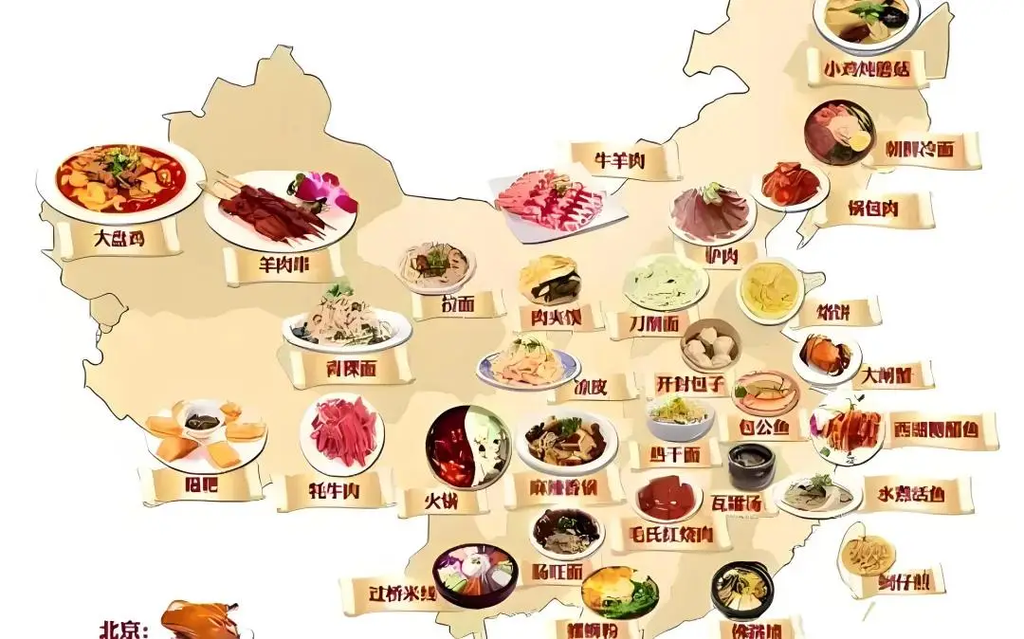
Chinese food culture has a long‑standing history. The widely‑recognized Eight Major Cuisines consist of Shandong Cuisine, Sichuan Cuisine, Cantonese Cuisine, Jiangsu Cuisine, Fujian Cuisine, Zhejiang Cuisine, Hunan Cuisine and Anhui Cuisine.
中国饮食文化源远流长,较为社会公认的有八大菜系鲁菜、川菜、粤菜和苏菜,闽菜、浙菜、湘菜、徽菜。
Chinese regional cuisines refer to complete, self‑contained culinary techniques and flavour systems evolved over a long period of time. Shaped by local climate, geography, history, natural resources and dining customs within a given region, these local dishes have gained nationwide recognition. Numerous culinary schools have emerged throughout China’s cooking history. Back in the Qing Dynasty, Chinese food was classified into Beijing‑style, Jiangsu‑style and Cantonese‑style. With substantial cultural development across the country starting from the Republic of China era, four major culinary schools took shape: North China, Jiangzhe, South China and Southwest China. The North‑China school later gave rise to Shandong Cuisine, which became the leader among the Eight Major Cuisines. The Jiangzhe school split into Jiangsu, Zhejiang and Anhui Cuisine; the South‑China school branched into Cantonese and Fujian Cuisine; and the Southwest‑China school yielded Sichuan and Hunan Cuisine. Shandong, Sichuan, Jiangsu and Cantonese Cuisine took shape at an earlier stage. Gradually, Zhejiang, Fujian, Hunan and Anhui local dishes rose to fame, forming China’s famous “Eight Major Cuisines”. The ranking shifted amid ongoing competition: Sichuan Cuisine moved up to second place while Jiangsu Cuisine dropped to third. Ultimately, the most influential and socially‑acknowledged cuisines are Shandong, Sichuan, Jiangsu, Cantonese, Fujian, Zhejiang, Hunan and Anhui, commonly known as China’s “Eight Major Cuisines”.
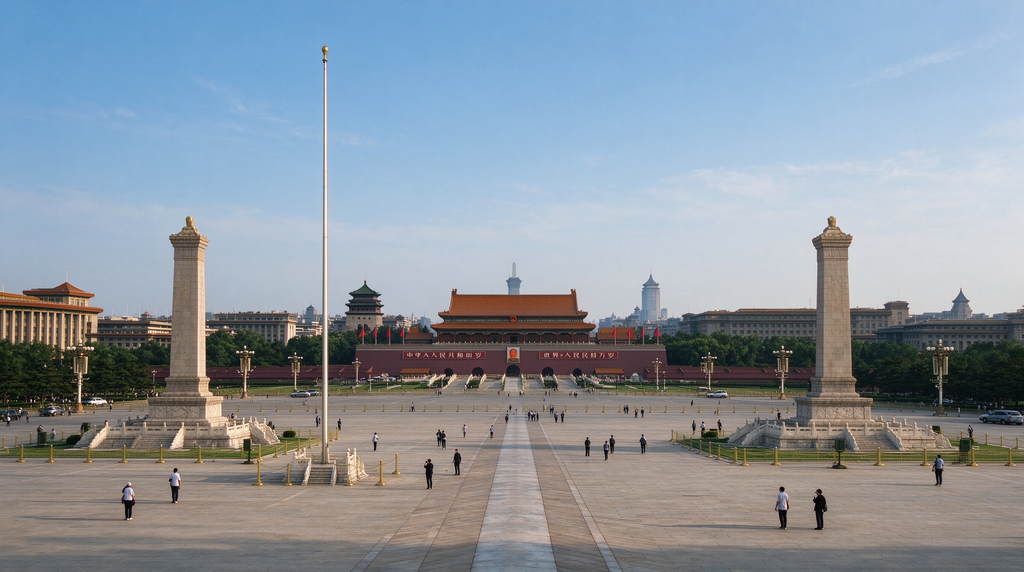
China’s administrative divisions consist of provinces, autonomous regions and municipalities directly under the Central Government. Provinces and autonomous regions are further divided into autonomous prefectures, counties, autonomous counties and cities. Counties and autonomous counties are divided into townships, ethnic townships and towns. At present, China has 34 provincial‑level administrative regions: 23 provinces, 5 autonomous regions, 4 municipalities directly under the Central Government and 2 special administrative regions. Historically and by convention, each provincial‑level administrative region has its own short name. The seat of a provincial people’s government is known as the provincial capital (or capital for autonomous regions). The seat of the Central People’s Government is the national capital, and Beijing is the capital of China. Hong Kong and Macao are part of China’s territory. The Chinese Government resumed the exercise of sovereignty over Hong Kong on 1 July 1997 and established the Hong Kong Special Administrative Region. It resumed the exercise of sovereignty over Macao on 20 December 1999 and established the Macao Special Administrative Region.
Applicants must be school-age foreign students without Chinese nationality in accordance with the Nationality Law of the People’s Republic of China, and shall apply for admission with a valid ordinary foreign passport. Applicants who once held Chinese nationality are generally required to provide proof of Chinese nationality cancellation.
年龄与学历要求|Age and Academic Qualification Requirements
中学申请对年龄与所申请年级的匹配度要求严格,通常需要提供相应的毕业证书或同等学力证明。
Secondary school applications have strict requirements on the matching of applicants’ age and the applied grade. Applicants are usually required to provide corresponding graduation certificates or proof of equivalent academic attainment.
初中:一般要求年满12周岁,并已完成小学教育。
Junior High School: Applicants are generally required to be at least 12 years old and have completed primary school education.
高中:一般要求年满15周岁,并已完成初中教育,提供初中毕业证书及成绩单。
Senior High School: Applicants are generally required to be at least 15 years old, have completed junior high school education, and provide a junior high school graduation certificate and academic transcripts.
部分学校对年龄有更具体的区间要求,例如人大附中要求申请者年龄在15至17岁之间。
Some schools set more specific age ranges. For example, the High School Affiliated to Renmin University of China requires applicants to be aged 15 to 17.
语言能力要求|Language Proficiency Requirements
语言要求因学校、课程类型及学生汉语基础而异,通常高中要求高于初中。
Language requirements vary by school, curriculum type and students’ Chinese foundation, and the requirements for senior high school are usually higher than those for junior high school.
初中:通常要求具备一定的汉语基础,部分学校未设定硬性HSK分数门槛,但会通过入学测试评估。
Junior High School: A certain foundation in Chinese is generally required. Some schools do not set a rigid HSK score threshold, but will assess students’ Chinese proficiency through entrance tests.
高中:常见要求为HSK四级以上。
Senior High School: HSK Level 4 or above is a common requirement.
Proficiency-based Class Teaching: Many schools provide language classes or Chinese remedial courses for students with substandard language proficiency, who can be promoted to formal academic classes after meeting the standards. For students with high Chinese proficiency (such as HSK Level 5 or 6), some schools allow them to study in classes with local Chinese students.
This is a key difference between secondary school applications and higher education applications. Minor international students must have a legal guardian residing within China.
Guardian Qualification: A guardian is usually a long-term resident Chinese citizen (with local household registration or residence permit) or a foreign national holding a valid Chinese residence permit. If the student’s parents do not reside in China on a long-term basis, a resident in China must be formally entrusted as the guardian.
Guardianship Documents: Notarized guardianship power of attorney and guardian guarantee letter are usually required. If the entrustment procedures are completed overseas, they generally need to be notarized by the home country and authenticated by Chinese embassies and consulates.
入学考核方式|Entrance Assessment Methods
中学录取由各校自主组织,没有统一考试。常见方式包括:
Secondary school admissions are independently organized by each school with no unified national examination. Common assessment methods include:
材料审核与面试:审查以往成绩、学历证明及面试表现。
Document Review and Interview: Schools review students’ past academic scores, educational certificates and interview performance.
笔试:部分学校会组织数学、语文、外语等主科的入学测试。
Written Examination: Some schools organize entrance tests for major subjects such as mathematics, Chinese and foreign languages.
成绩参考:对于申请高中的学生,学校可能参考其中考成绩或初中在校平时成绩。
Academic Score Reference: For senior high school applicants, schools may refer to their high school entrance examination scores or regular academic scores of junior high school.
其他申请材料|Other Application Documents
除上述核心条件外,通常还需准备:
In addition to the above core requirements, applicants usually need to prepare the following documents:
学术材料:原就读学校的成绩单、毕业证书或在学证明。
Academic Documents: Transcripts, graduation certificates or school enrollment certificates issued by the previous school.
身份与健康材料:护照及签证页复印件、《外国人体格检查表》(通常要求近期出具)、出生证明。
Identity and Health Documents: Copies of passport and visa pages, Foreigner’s Physical Examination Record (usually newly issued), and birth certificate.
申请文书:个人自我介绍、推荐信(部分学校要求)等。
Application Documents: Personal statement, recommendation letter (required by some schools), etc.